what does it mean to meditate
Meditation is more than just 'clearing your mind'—discover the true purpose of the practice and the common misconception that holds most people back.
In this article
🧘♀️ Your Daily Meditation Mantra
Unlocking the Depths: What Does It Truly Mean to Meditate?
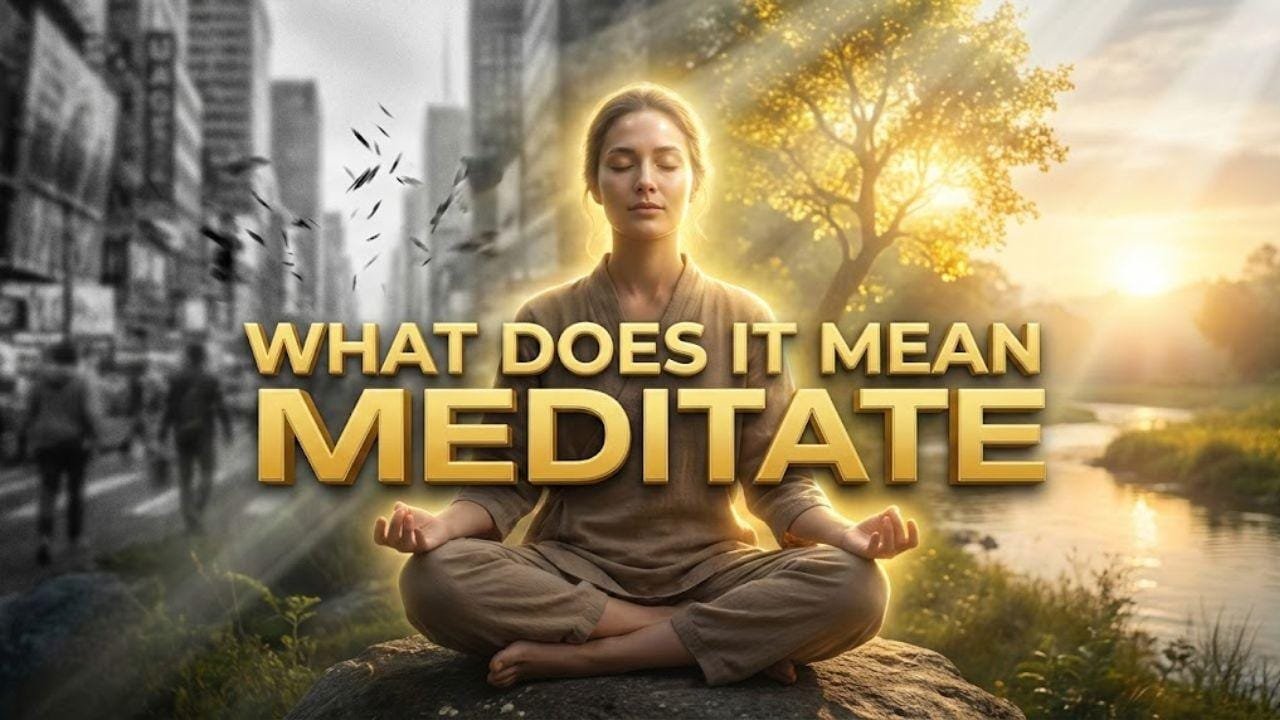
The simple question, “What does it mean to meditate?” belies a universe of profound experience and practical application. It’s far more than just sitting still or emptying the mind, a common misconception that often leads to frustration and abandonment of a practice with immense potential for well-being. At its core, meditation is a practice of intentional awareness, a conscious effort to train the mind to be present with whatever arises, without judgment or immediate reaction. It’s about cultivating a different relationship with our inner landscape, one characterized by curiosity, acceptance, and ultimately, a deeper understanding of ourselves and our place in the world.
The Neurobiological Tapestry of Meditation
To truly grasp what meditation means, we must venture into the fascinating realm of neurobiology. For centuries, meditators have spoken of inner peace, clarity, and enhanced focus. Modern science, through sophisticated brain imaging techniques like fMRI and EEG, is beginning to map these subjective experiences onto concrete neural changes. When we meditate, we are not merely passively observing; we are actively reshaping our brains.
Play this while you read
One of the most significant findings is the impact of meditation on the prefrontal cortex, the seat of executive functions such as attention, decision-making, and self-awareness. Regular meditation practice has been shown to increase grey matter density in this area, essentially thickening the neural pathways responsible for these crucial cognitive abilities. This means meditators often exhibit improved focus, better impulse control, and a greater capacity for complex problem-solving. Think of it as a mental workout, strengthening the very muscles that govern our ability to concentrate and navigate the complexities of life.
Furthermore, meditation appears to modulate the amygdala, the brain’s alarm system responsible for processing fear and threat. Studies have consistently demonstrated that meditators show reduced amygdala reactivity, particularly in response to stressful stimuli. This doesn’t mean that challenges disappear, but rather that our *response* to them changes. We become less prone to the knee-jerk, fight-or-flight reactions that can hijack our thinking and lead to anxiety and overwhelm. Instead, a more measured, considered response becomes possible, rooted in a calmer, more centered state of being. This neurobiological shift is a powerful testament to meditation’s ability to foster resilience in the face of adversity.
The brain’s default mode network (DMN), a network of brain regions active when our minds are wandering, is another area profoundly impacted by meditation. While mind-wandering is a natural human tendency, an overactive DMN is often associated with rumination, anxiety, and dissatisfaction. Meditation, particularly mindfulness meditation, has been shown to decrease activity in the DMN, allowing for a greater capacity to stay present and engaged with the current moment rather than getting lost in thoughts of the past or future. This leads to a reduction in self-referential processing and an increase in a sense of peace and equanimity.
The concept of neuroplasticity, the brain’s remarkable ability to reorganize itself by forming new neural connections throughout life, is central to understanding meditation’s transformative power. Each moment spent in mindful awareness, each gentle redirection of attention back to the breath or a chosen anchor, is an act of rewiring. It’s a continuous process of strengthening desired neural pathways and weakening those associated with habitual reactivity and distraction.
The Psychological Landscape: Cultivating Inner Space
Beyond the physical architecture of the brain, meditation cultivates a rich inner psychological landscape. It’s a journey of self-discovery, a gentle unveiling of the layers that obscure our true nature. One of the primary psychological benefits is the development of **mindfulness**, the ability to be fully present and aware of our thoughts, feelings, bodily sensations, and surrounding environment, without judgment. This isn’t about suppressing thoughts or feelings, but rather about observing them as they arise and pass, much like clouds drifting across the sky.
This non-judgmental observation is a cornerstone of what it means to meditate. We are often our own harshest critics, caught in cycles of self-criticism and negative self-talk. Meditation offers an alternative. By approaching our inner experiences with curiosity and kindness, we begin to dismantle these ingrained patterns of judgment. We learn to recognize that thoughts are just thoughts, not necessarily truths, and feelings are transient states, not permanent identities. This detachment from our inner dialogue is incredibly liberating, freeing us from the tyranny of our own minds.
Another significant psychological shift occurs in our relationship with emotions. Instead of being swept away by strong emotions like anger, sadness, or fear, meditation teaches us to acknowledge them, feel them in the body, and allow them to move through us. This process, often referred to as **emotional regulation**, is crucial for mental well-being. When we suppress emotions, they tend to fester and manifest in unhealthy ways. By allowing them space and observing them with compassion, we can process them more effectively and reduce their disruptive power. This doesn’t mean becoming emotionally numb; rather, it means developing the capacity to experience emotions fully without being overwhelmed by them.
Meditation also fosters a profound sense of **self-compassion**. As we become more aware of our inner struggles and imperfections without judgment, we naturally begin to extend kindness and understanding to ourselves. This is a vital antidote to the pervasive culture of comparison and self-doubt. When we are compassionate towards ourselves, we are better equipped to face challenges, learn from mistakes, and build resilience. This internal shift ripples outward, impacting our relationships with others.
The practice cultivates **equanimity**, a state of mental calmness and composure, especially in difficult situations. It’s about finding an inner stability that is not dependent on external circumstances. This doesn’t mean a lack of engagement or care, but rather an ability to remain centered and clear-headed, even when things are turbulent. This equanimity allows for more skillful decision-making and a more peaceful existence.
Furthermore, meditation can enhance **insight** and **clarity**. By quieting the constant chatter of the mind, we create space for deeper understanding to emerge. We might gain new perspectives on recurring problems, recognize unhelpful patterns of behavior, or experience moments of profound self-awareness. This is the unveiling of wisdom that can arise from sustained, focused introspection.
Ancient Wisdom, Modern Relevance: The Roots of Meditation
The practice of meditation is not a recent invention; it is an ancient wisdom tradition woven into the fabric of human history. Its roots can be traced back thousands of years to various spiritual and philosophical traditions, most notably Buddhism, Hinduism, and Taoism. While the specific techniques and terminology may differ across these traditions, the underlying principles remain remarkably consistent: the cultivation of awareness, the quieting of the mind, and the pursuit of inner peace and enlightenment.
In the Buddhist tradition, meditation, or *dhyāna*, is a central pillar of the path to liberation. Practices like Vipassanā (insight meditation) and Samatha (calm abiding meditation) aim to develop wisdom and concentration, respectively. The emphasis is on understanding the impermanent, unsatisfactory, and selfless nature of reality through direct experience. The ancient texts, such as the Suttas, describe the Buddha’s own journey of intense meditation leading to profound awakening, offering a timeless blueprint for those seeking similar transformation.
Hindu traditions, particularly Vedanta and Yoga, also place great importance on meditation. The Yoga Sutras of Patanjali, a foundational text for Yogic philosophy, outlines eight limbs of yoga, with *dhyāna* (meditation) and *samādhi* (deep meditative absorption) being the final stages. These practices are seen as a means to unite the individual consciousness with the universal consciousness, leading to a state of bliss and freedom. Mantras, breath control (*pranayama*), and focused attention on deities or internal energy centers are common meditative techniques.
Taoist practices, such as Qigong and Neidan (internal alchemy), also incorporate meditative elements aimed at cultivating vital energy (*qi*) and achieving harmony with the Tao, the fundamental principle of the universe. Stillness, visualization, and mindful movement are often employed to achieve a state of energetic balance and spiritual well-being.
What is remarkable is how these ancient insights resonate so powerfully with modern scientific findings. The yogis and sages of antiquity, through diligent introspection and practice, intuitively understood what neurobiology is now confirming: that the mind is malleable and that conscious training can lead to profound changes in our experience of ourselves and the world. They spoke of the “observer” witnessing the unfolding of phenomena, a concept mirrored in the scientific understanding of the detached awareness cultivated through mindfulness.
These traditions offer not just techniques, but a comprehensive philosophy for living, where meditation is not an isolated activity but an integral part of a meaningful life. They emphasize ethical conduct, compassion, and a deep respect for all sentient beings as prerequisites and companions to successful meditation practice. This holistic approach underscores that what it means to meditate extends beyond the cushion; it is a way of being in the world.
Finding Your Anchor: Practical Approaches to Meditation
The beauty of meditation lies in its accessibility. While the ultimate depth of practice may take a lifetime to explore, the entry points are simple and can be found in nearly any moment. The key is to find an “anchor” – something to gently return your attention to when the mind inevitably wanders.
The most common and accessible anchor is the **breath**. Simply bringing your awareness to the sensation of the breath entering and leaving your body can be a complete meditation practice. Notice the rise and fall of your chest or abdomen, the feeling of the air at your nostrils. There’s no need to change your breath, just observe it as it is. When your mind drifts, gently notice where it went, and then kindly escort it back to the breath. This gentle, repeated act of returning is the essence of training your attention.
Another powerful anchor is **bodily sensations**. You can bring your awareness to the feeling of your feet on the ground, the pressure of your body against the chair, or any other physical sensation that arises. This can be particularly helpful for those who find focusing on the breath challenging. The goal is to cultivate a non-judgmental awareness of what is present in your physical experience.
**Sounds** can also serve as an anchor. Rather than trying to block out noise, you can practice simply noticing sounds as they arise and pass away without labeling them as “good” or “bad.” This can help to develop a more accepting attitude towards the external environment.
**Mantra meditation** involves the silent repetition of a word or phrase. This can be a Sanskrit mantra, a word in your native language, or a simple affirmation. The repetitive nature of the mantra can help to focus the mind and create a sense of calm.
**Walking meditation** integrates mindful awareness with movement. As you walk, pay attention to the sensations in your feet, the movement of your legs, and the rhythm of your steps. This can be a wonderful way to practice mindfulness when sitting still is difficult.
For those drawn to visualization, **guided meditations** can be incredibly beneficial. These are often led by an instructor, either in person or through recordings, and guide you through specific mental exercises, such as imagining a peaceful place or focusing on a particular quality like gratitude.
The crucial element, regardless of the chosen anchor, is consistency. Even five minutes a day, practiced regularly, can yield significant benefits. It’s not about achieving a perfect state of stillness, but about cultivating the habit of returning to presence.
Navigating the Inner Landscape: Common Challenges and Insights
It’s important to acknowledge that the path of meditation is rarely linear or without its challenges. Understanding these common hurdles can actually be a part of the practice itself.
One of the most frequent experiences is **restlessness**. The mind, accustomed to constant stimulation, may feel agitated and unwilling to sit still. This is normal. Instead of fighting it, acknowledge the restlessness. Notice where you feel it in your body. Breathe into it. Often, by simply observing it without resistance, it begins to dissipate.
**Drowsiness** is another common companion, especially during longer sits. If you find yourself nodding off, you might try adjusting your posture to be more upright, gently opening your eyes slightly, or even bringing your awareness more intensely to the physical sensations of alertness.
The experience of **difficulty concentrating** is, paradoxically, a sign that meditation is working. It highlights just how much our minds wander! The practice isn’t about *never* having your mind wander, but about noticing *when* it wanders and gently bringing it back. Each return is a strengthening of your attentional “muscle.”
**Intense emotions** can surface during meditation, sometimes unexpectedly. If strong feelings of sadness, anger, or anxiety arise, approach them with the same gentle curiosity you would any other experience. Allow them to be present without judgment, and remind yourself that they are temporary. If the emotion feels overwhelming, it’s perfectly fine to gently come out of the meditation and attend to your well-being.
The feeling of **”doing it wrong”** is perhaps the most pervasive challenge. There is no “wrong” way to meditate, only the way your experience unfolds. The intention to be present and the gentle redirection of attention are the practice. Release the need for perfection and embrace the process.
Ultimately, what it means to meditate is a deeply personal journey of exploration. It’s about cultivating a more compassionate, aware, and resilient self, one breath at a time. The benefits extend far beyond the meditation cushion, weaving themselves into the fabric of everyday life, transforming how we relate to ourselves, others, and the world around us.
Disclaimer: This content is for informational purposes only and does not constitute medical or psychological advice. Consult with a qualified professional for personalized guidance.
About this article. This is a guide to a contemplative and symbolic practice, not to medicine. Nothing here is medical, psychological or therapeutic advice, no practice on this page treats or prevents any condition, and none of it replaces care from a qualified professional. If you are living with persistent pain, exhaustion, low mood, anxiety, insomnia or any symptom that worries you, please talk to a doctor — and never stop or change a prescribed medication because of something you read here. If you have epilepsy or a seizure disorder, check with your doctor before using pulsed tones or binaural beats.
Read this next
How Meditation Boosts Confidence & Overcomes Insecurity
Boost your self-confidence with the power of the 432Hz Root Chakra Frequency. Join us today and begin your jou…
12 min readSacral Chakra Meditation 480Hz: Menstrual Relief Guide
Experience relief from menstrual discomfort with our 480Hz Sacral Chakra Meditation. Harness the power of Mira…
10 min read768 Hz Crown Chakra Meditation: Unlock Your Inner Wisdom
Elevate consciousness, see the big picture & solve problems with our 768 Hz Crown Chakra Miracle Meditatio…
13 min read