What Is Anima Mundi? Occultism And The World Soul
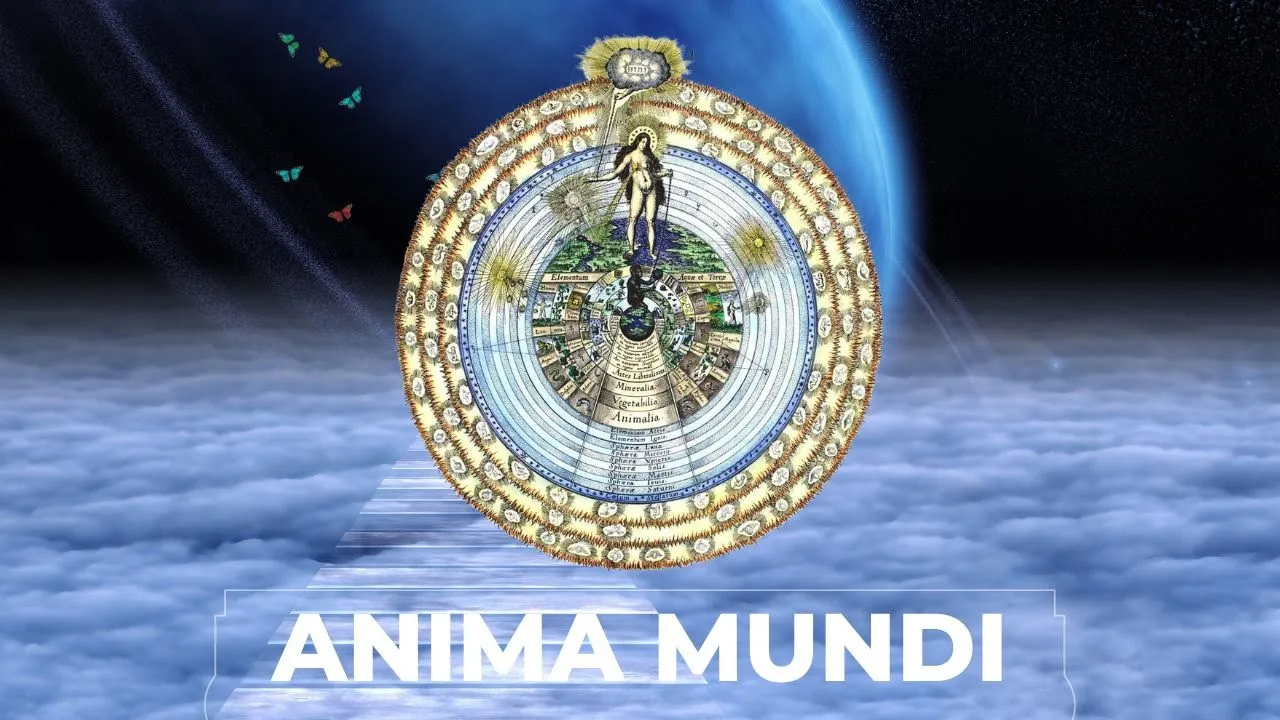
Anima Mundi, the spirit of the world, the pure celestial spirit, which was suggested by ancient philosophers to permeate all aspects of nature.
In this article
- Unveiling the Enigma: What is Anima Mundi, The World Soul?
- The Genesis of a Grand Idea: Historical Roots of the World Soul
- Anima Mundi Through the Ages: From Stoicism to Renaissance Alchemy
- Anima Mundi in the Occult Tradition: The Earth as a Sentient Being
- Beyond the West: Parallel Concepts of the World Soul
Delving into the profound philosophy of Anima Mundi, or the ‘World Soul,’ unveils a timeless concept that posits a universal, ethereal spirit permeating all existence, offering a powerful lens through which to understand our deep connection to the cosmos and each other. This comprehensive guide will meticulously explore the historical roots, philosophical evolution, and contemporary relevance of this mystical concept, especially its intriguing role in Occultism, providing you with a definitive resource for grasping the true essence of the living Earth.
Unveiling the Enigma: What is Anima Mundi, The World Soul?
At its core, Anima Mundi, Latin for ‘World Soul,’ describes a fundamental belief that the entire planet, and by extension the universe, possesses an inherent soul or consciousness. This isn’t merely a poetic metaphor; it’s a profound philosophical and spiritual concept suggesting that all animate and inanimate objects – from the smallest atom to the grandest galaxy – are intrinsically linked by a unifying, intelligent force. Imagine the world as a single, vast organism, with every part playing a vital role, much like the soul within the human body connects and animates its various components. This ancient wisdom, far from being a relic of the past, offers potent insights into our modern quest for meaning, ecological balance, and spiritual harmony.
Play this while you read
Key Concept: Anima Mundi posits a universal, pure ethereal spirit diffused throughout all nature, connecting all living things on Earth as a soul connects to the human body. It is often referred to as the World Soul.
The concept of the World Soul underscores an essential interdependence, fostering a perception where harming the planet or its beings is ultimately harming ourselves. This critical shift in perspective can pave the way for a more compassionate, sustainable, and inclusive world, reminding us of our shared origin and destiny.
The Genesis of a Grand Idea: Historical Roots of the World Soul
While the phrase Anima Mundi is often attributed to Plato, the underlying concept of a universal life force or interconnected consciousness predates him, appearing in various forms across ancient cultures and philosophies. Understanding its historical trajectory reveals a fascinating evolution of thought.
Plato’s Cosmological Vision: The World-Soul in Timaeus
The most influential articulation of Anima Mundi comes from the Greek philosopher Plato, particularly in his dialogue Timaeus. Here, Plato describes the creation of the cosmos by a divine craftsman, the Demiurge, who fashions the World-Soul as an intermediary between the eternal, unchanging Forms and the sensible, material world. This World-Soul is depicted as a living, intelligent entity, composed of both divisible and indivisible elements, harmoniously arranged according to mathematical proportions.
For Plato, the World Soul:
- Is the source of cosmic motion and order.
- Mediates between the divine intellect and the physical universe.
- Is responsible for the regular movements of the heavens and the structure of reality.
- Possesses reason and intelligence, imbuing the universe with life and purpose.
This Platonic conception provided a robust framework for subsequent philosophical and mystical traditions, highlighting the idea of an intelligent, animating principle permeating the entire cosmos.
Pre-Platonic Whispers: Earlier Philosophical Currents
Before Plato, elements of the World Soul concept can be traced to earlier thinkers:
- The Presocratics: Philosophers like Thales, who believed water was the arche (first principle), or Anaximenes, who saw air as the fundamental substance, often imbued these elements with a life-giving, animating quality. Heraclitus’s concept of the Logos, an eternal, ordering principle, also resonates.
- Pythagoreans: With their emphasis on numbers, harmony, and the musicality of the spheres, the Pythagoreans posited an underlying cosmic order that could be seen as an early precursor to an intelligent world-soul. They believed the cosmos was a living, breathing entity.
These ancient explorations laid the groundwork for Plato’s more systematic presentation, demonstrating humanity’s enduring fascination with the idea of a living, breathing universe.
Anima Mundi Through the Ages: From Stoicism to Renaissance Alchemy
The idea of the World Soul did not end with Plato; it evolved and transformed, influencing numerous philosophical and spiritual schools across millennia.
Stoicism: The Universal Pneuma and Rational Principle
The Stoics, founded by Zeno of Cyprus in the 3rd century BC, embraced and refined the concept of Anima Mundi, renaming it as the “universal pneuma” (breath or spirit). For them, this pneuma was the active, rational principle that permeated the entire cosmos, acting as both soul and body. It was a fiery, intelligent breath that organized matter, making the universe a single, living, rational being. This pantheistic view meant that divinity was not separate from the world but immanent within it.
Stoic Perspective: According to the Stoics, the Anima Mundi (universal pneuma) is the single most important vital force in the universe, a rational and fiery breath that organizes all of existence.
The Stoics believed that human souls were fragments of this universal pneuma, connecting individuals directly to the cosmic reason. Living in harmony with nature, therefore, meant living in accordance with this universal rational principle.
Neoplatonism: Emanation and the Hierarchical Cosmos
Later, the Neoplatonists, particularly Plotinus (3rd century AD), further developed Plato’s ideas. In Neoplatonism, the Anima Mundi is one of the hypostases (fundamental principles) in a hierarchical emanation from the One. It stands as an intermediary between the pure, transcendent Intellect (Nous) and the material world. The World-Soul is responsible for forming and governing the sensible universe, translating the perfect blueprints of the Intellect into the physical realm. It is the bridge that connects the spiritual and material dimensions, ensuring the cosmos remains a coherent, living whole.
Hermeticism and Alchemy: The Living Earth and Cosmic Sympathy
During the Renaissance, interest in Anima Mundi surged through the re-discovery of Hermetic texts. Hermetic philosophy emphasized the interconnectedness of all things through ‘cosmic sympathy’ – the idea that what happens in one part of the universe affects all others. This led to a profound understanding of the Earth itself as a living, breathing entity.
Hermetic philosophers such as Paracelsus (16th century) and later Friedrich Schelling (18th-19th century) shared similar concepts. Paracelsus, a renowned physician and alchemist, saw the entire cosmos, including Earth, as animated by a divine spirit. The alchemists, in particular, viewed the Earth not merely as inert matter but as a dynamic body containing hidden vital forces, believing that minerals “grow” within it.
Basilius Valentinus, another significant alchemist, famously stated, “The world is not just a dead body,” directly referencing the active, living quality of the Earth, which is central to the concept of the Anima Mundi. This perspective was crucial for the alchemical quest to understand and transform nature, as it implied an underlying intelligence within matter itself.
Anima Mundi in the Occult Tradition: The Earth as a Sentient Being
The concept of Anima Mundi holds particular significance within Occultism, where it is often viewed through a lens of esoteric wisdom and hidden knowledge. Here, the World Soul is not just a philosophical construct but a palpable, active force that can be understood and even interacted with.
Occult Terminology: The ‘Earth Soul’ Concept
In Occultism, the term Anima Mundi is frequently used to mean “Earth soul,” explicitly conveying the concept that our planet Earth is a fully living, sentient entity. This isn’t merely a poetic analogy; it implies that the Earth possesses consciousness, subtle energy bodies, and vital functions analogous to a living organism.
Occult Perspective: In Occultism, Anima Mundi denotes the Earth soul, recognizing Planet Earth as a fully living, conscious entity with systems akin to a human body.
Proponents of this view often describe the Anima Mundi’s body as possessing:
- Nervous systems: Represented by ley lines, energetic grids, and geological fault lines.
- Circulatory systems: Evident in ocean currents, rivers, and the flow of subterranean water.
- Respiratory system: The atmosphere, cycles of oxygen and carbon dioxide.
- Chakras: Specific power points or vortices of energy on the Earth’s surface, often associated with sacred sites or mountains.
This perspective transforms our understanding of geography, viewing landscapes not as inert backdrops but as living tissues and organs of a colossal being. It emphasizes a deeply reverential approach to the environment, recognizing its intrinsic vitality and sacredness.
Theosophy’s Embrace: Blending East and West
After the initial discussions by alchemists and mystics, the concept of Anima Mundi was enthusiastically embraced and further elaborated by Theosophists in the late 19th and early 20th centuries. Theosophy, founded by Helena Blavatsky, sought to synthesize Western esoteric traditions with Eastern spiritual philosophies. They viewed the World Soul as a universal collective consciousness, a storehouse of all knowledge and experience, and an integral component of the cosmic hierarchy.
According to Theosophical teachings, the Anima Mundi has a tripartite structure, mirroring that of a human being:
- The Soul (Higher Self): The spiritual, divine essence of the Earth.
- The Subtle Body (Astral/Etheric): The energetic blueprint and emotional-mental field of the planet.
- The Material Body (Physical): The tangible land, oceans, atmosphere, and all physical forms.
This comprehensive model allowed Theosophists to integrate concepts of planetary karma, spiritual evolution, and the energetic influence of the Earth on its inhabitants. For them, understanding the Anima Mundi was key to unlocking deeper spiritual truths and realizing humanity’s role within the larger cosmic plan.
Beyond the West: Parallel Concepts of the World Soul
The idea of a universal life force or interconnected cosmic consciousness is not exclusive to Western philosophy. Many Eastern and indigenous traditions offer parallel concepts that resonate deeply with the principles of Anima Mundi.
Eastern Traditions: Chi, Prana, and Universal Life Force
In Eastern philosophies, the concept of a unifying life force is fundamental:
- Taoism (China): The concept of ‘Chi’ (Qi) describes a circulating life force whose balance and free flow are essential for health and harmony. Chi is not limited to living beings; it flows through landscapes (Feng Shui) and the entire cosmos.
- Hinduism (India): ‘Prana’ is the universal life force, or vital energy, that animates all existence. It is the breath of life, present in every atom and being. Yoga and pranayama (breath control) aim to regulate and enhance this flow within the individual, connecting them to the cosmic Prana.
- Buddhism: While not using a direct “world soul” term, the Buddhist principle of interdependent origination (Pali: Paticcasamuppāda) posits that all phenomena arise in dependence upon other phenomena, creating an intricate web of interconnectedness that echoes the essence of Anima Mundi.
These traditions, much like the Western esoteric views, emphasize that understanding and harmonizing with this universal life force is crucial for spiritual growth and well-being.
Indigenous Worldviews: Mother Earth and Spirit of Place
Indigenous cultures worldwide have long held reverence for the Earth as a living, sacred entity. Concepts like Mother Earth (Pachamama in Andean cultures, Gaia in Greek mythology, or various names among Native American tribes) exemplify this deep connection. In animistic belief systems, spirits inhabit not only living creatures but also mountains, rivers, trees, and specific geographical locations. These “spirits of place” are local manifestations of a larger, animating force – a localized World Soul.
For these cultures, the Earth is not a resource to be exploited but a living relative, a provider, and a spiritual guide. Rituals, ceremonies, and sustainable practices are often dedicated to honoring and maintaining balance with these living aspects of the Earth, demonstrating an innate understanding of planetary consciousness.
The Modern Reawakening: Anima Mundi in Contemporary Thought
In our technologically advanced yet increasingly disconnected world, the ancient wisdom of Anima Mundi is experiencing a powerful resurgence, influencing fields from environmentalism to psychology.
Deep Ecology and Environmentalism: The Gaia Hypothesis
One of the most significant modern parallels to Anima Mundi is the Gaia Hypothesis, proposed by scientist James Lovelock and microbiologist Lynn Margulis. This scientific theory posits that the Earth is a self-regulating superorganism, where all living and non-living components interact to maintain conditions conducive to life. While Lovelock’s initial hypothesis was purely scientific, it sparked a profound philosophical reevaluation of our relationship with the planet, inspiring the deep ecology movement.
Deep ecology advocates for a holistic worldview, asserting the intrinsic value of all life forms and ecosystems, independent of their utility to humans. This perspective resonates strongly with the spirit of the World Soul, urging humanity to recognize itself as an integral part of a larger, living system, and to act with reverence and responsibility towards the planetary whole.
Jungian Psychology: The Collective Unconscious and Archetypes
While not directly adopting the term Anima Mundi, the analytical psychology of Carl Jung presents intriguing conceptual parallels. Jung’s idea of the collective unconscious describes a universal, inherited reservoir of human experience, containing archetypes that manifest in myths, symbols, and dreams across all cultures. This shared psychic reality could be seen as a human reflection or emanation of a greater World Soul, suggesting a deep, unconscious connection between all minds and the broader cosmos.
Jung himself studied alchemy and Gnosticism extensively, recognizing the ancient wisdom embedded in these traditions. The archetypes, as universal patterns, could be viewed as the ‘energetic imprints’ of the Anima Mundi on the human psyche, guiding our collective journey toward individuation and wholeness.
Holistic Wellness and Mind-Body Connection
Contemporary holistic practices, such as meditation, yoga, mindfulness, and energy healing, often draw upon the principles of interconnectedness that are central to Anima Mundi. These practices emphasize balancing the mind, body, and spirit, recognizing that individual well-being is deeply intertwined with the health of our environment and our connection to the larger energetic field of the Earth. By grounding oneself in nature, cultivating inner peace, and fostering empathy, individuals can consciously align with the universal life force, fostering a sense of harmony and unity not just within themselves but with the world around them.
This reawakening represents a critical shift in perception, moving away from a purely mechanistic view of the world towards one that acknowledges its inherent aliveness and our essential interdependence.
Experiencing Anima Mundi: Practical Applications for a Soulful Life
Understanding Anima Mundi is not just an intellectual exercise; it offers a profound pathway to living a more connected, meaningful, and responsible life. How can we practically engage with this concept?
Mindfulness and Connection with Nature
One of the simplest yet most powerful ways to connect with the World Soul is through mindful engagement with nature. Spend time outdoors, truly observing and feeling the environment:
- Forest Bathing (Shinrin-Yoku): Immerse yourself in the atmosphere of the forest, using all your senses. Feel the texture of bark, listen to the rustling leaves, breathe the scent of the earth.
- Mindful Walking: Pay attention to your steps on the ground, the feel of the air on your skin, the sounds of birds, the subtle shifts in light.
- Gardening: Directly interact with the soil, plants, and natural cycles. This hands-on experience fosters a direct connection to the Earth’s vitality.
These practices help dissolve the perceived separation between self and environment, fostering a sense of unity with the living planet.
Rituals and Practices to Honor the Earth
Many spiritual traditions offer rituals that acknowledge and honor the Earth as a living entity. You can adapt these or create your own:
- Offerings: Leave small, biodegradable offerings (like flowers, water, or seeds) in natural settings as a gesture of gratitude.
- Earth Meditations: Visualize sending your energy down into the Earth and drawing energy back up, feeling the pulse of the planet.
- Seasonal Celebrations: Mark solstices, equinoxes, and other seasonal transitions as opportunities to align with the Earth’s natural rhythms.
These practices reinforce the understanding that the Earth is not merely a resource but a sacred, sentient being worthy of respect and reverence.
Cultivating Compassion and Universal Empathy
If all beings are interconnected by the Anima Mundi, then compassion for others – human, animal, and plant – becomes a natural outflow. This understanding encourages:
- Ethical Consumption: Making conscious choices about what we buy and consume, considering its impact on the planet and its inhabitants.
- Advocacy for the Environment: Speaking up for ecological protection and sustainable practices.
- Interpersonal Harmony: Recognizing the ‘World Soul’ within every individual, fostering greater empathy, understanding, and unity in human interactions.
Engaging with Anima Mundi transcends individual spiritual growth; it inspires us to be stewards of the planet and compassionate members of the universal community. It reminds us that our essential interdependence is not a weakness but the source of our greatest strength and potential for a harmonious future.
Dispelling Misconceptions: What Anima Mundi is NOT
To fully grasp the profound nature of Anima Mundi, it’s helpful to clarify what it isn’t, especially in modern interpretations:
- Not an Anthropomorphic Deity: While often described with human-like attributes (soul, body, consciousness), Anima Mundi is generally not conceived as a personal god with human emotions or a specific form. It’s more of an impersonal, universal animating principle or intelligence.
- Not a Replacement for Individual Spirituality: Understanding the World Soul enhances, rather than replaces, individual spiritual practices. It provides a broader context for personal growth and connection, linking the individual journey to the cosmic one.
- Not Pseudoscience (in its modern revival): While originating in philosophy and metaphysics, modern concepts like the Gaia Hypothesis and quantum entanglement echo the interconnectedness that Anima Mundi describes. It’s a philosophical framework that can inspire scientific inquiry and ecological responsibility.
- Not a Call for Blind Worship: The concept encourages reverence and respect for nature, but it does not demand literal worship in the traditional sense. It’s about recognizing inherent value and living in harmony.
By understanding these distinctions, we can approach the rich tapestry of the Anima Mundi with clarity and appreciation for its enduring wisdom.
About this article. This is written for general interest and reflection. Nothing here is medical, psychological, legal or financial advice, and it is not a substitute for guidance from a qualified professional.
Frequently Asked Questions (FAQ) About Anima Mundi and the World Soul
What is the core meaning of Anima Mundi?
The core meaning of Anima Mundi, or the ‘World Soul,’ is the concept that the entire cosmos, particularly planet Earth, possesses a universal soul, consciousness, or animating spirit that connects all living and non-living things as one unified, intelligent entity.
Who first introduced the concept of Anima Mundi?
While similar ideas existed earlier, the term Anima Mundi and its most influential philosophical articulation were introduced by the Greek philosopher Plato in his dialogue Timaeus, where he described it as an intermediary between the divine intellect and the material world.
How does Anima Mundi relate to Occultism?
In Occultism, Anima Mundi is often interpreted as the “Earth soul,” viewing the planet Earth itself as a fully living, sentient being with subtle energy systems (like chakras) and a tripartite structure (soul, subtle body, material body), influencing various esoteric practices and beliefs.
Are there Eastern parallels to the World Soul?
Yes, many Eastern traditions feature parallel concepts. Examples include the Chinese concept of ‘Chi’ (Qi), the universal life force in Taoism, and the Indian concept of ‘Prana’, the vital energy animating all existence in Hinduism. These illustrate a shared understanding of interconnected universal energy.
What is the connection between Anima Mundi and modern environmentalism?
The concept of Anima Mundi strongly aligns with modern environmentalism, particularly with ideas like the Gaia Hypothesis and Deep Ecology. It fosters a worldview that regards Earth as a living organism with intrinsic value, encouraging reverence, sustainable living, and a deep sense of responsibility towards the planet.
Read this next
How To Meditate: Beginner’s Techniques & Benefits Guide
Explore Meditation 101: Understand core techniques, discover numerous benefits, and learn how to begin your jo…
21 min readHow Mindfulness Meditation Reduces Stress & Clears Your Mind
Discover how to achieve less stress and clearer thoughts with mindfulness meditation. Embrace the present mome…
13 min readWhat Is Zen Meditation? A Guide to Its Types & Benefits
Embark on a journey of mindfulness with Zen Meditation. Explore Zen Breathing, Zazen, Kinhin, Koan Study, and…
14 min read