Sacral Chakra Meditations
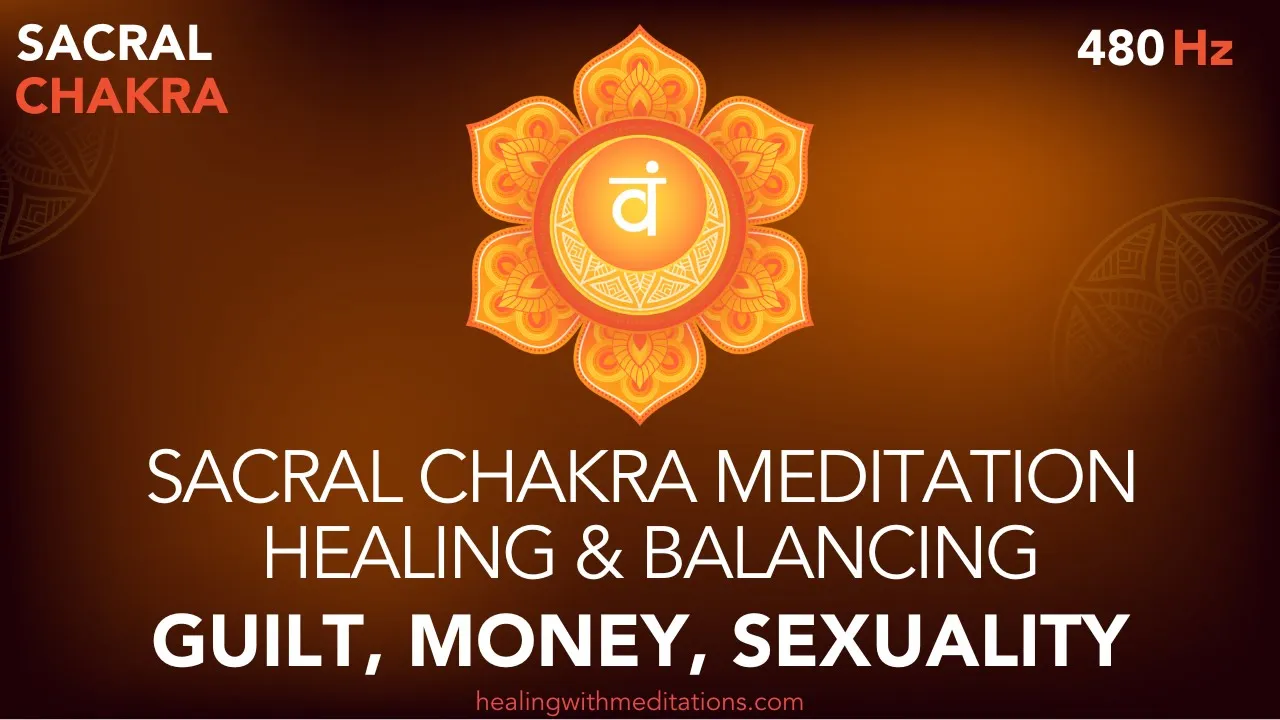
A sacral chakra meditation is for when the wanting has gone quiet. Svadhisthana sits low in the abdomen, and this tradition places appetite there — creativity, pleasure, the capacity to want something without apologising for it. People arrive here after a flat stretch, or after a long one spent being useful to everyone else.
| Sanskrit | Svadhisthana — “one’s own place” |
| Where | Low in the abdomen, below the navel |
| Colour | Orange |
| Element | Water |
| Governs | Creativity, emotion, pleasure, desire |
| Blocked | Numbness, creative block, guilt about wanting things |
| Balanced | You make something for no reason and enjoy it |
| Tone traditionally used | 417 Hz — a convention of the tradition, not a measured property |
What a sacral chakra meditation actually works on
The sacral centre is the one most often described as blocked by people who are functioning perfectly well. Work gets done, obligations get met, and nothing is enjoyed. The tradition reads that as appetite shut down rather than absent.
It is also the centre most associated with movement. Sitting still is not always the practice here — water, dance, cooking and making with the hands are all traditional, and they tend to work faster than stillness.
How to tell whether yours needs attention
Pick whichever is closest to your week.
Numbness rather than sadness. Food, music and company are all fine and none of them land.
Start with: something physical and pleasurable with no purpose — a swim, a long bath, cooking a meal you actually want. If it has lasted weeks, see a doctor.
The block that shows up as a blank page. Traditionally read as sacral energy with nowhere to go.
Start with: making something deliberately badly, for twenty minutes, with no intention of keeping it.
Common in people who were praised for being low-maintenance. The appetite is intact; the permission is missing.
Start with: naming one thing you want, plainly, without justifying it.
The over-firing version: appetite with no container. Novelty keeps rescuing you from the boring middle.
Start with: finishing one small thing this week. Badly is fine — completion is the point.
Traditionally the murkiest reading: stimulation deployed so you do not have to sit with a feeling.
Start with: an hour of nothing. Whatever surfaces is the actual subject.
How to practise it
Lie down with a hand low on the abdomen. Breathe slowly and let the belly rise. Rather than emptying the mind, let one pleasant physical memory sit there — warmth, water, a taste — without turning it into a plan.
Ten minutes, then get up and do one small physical thing you enjoy. The tradition treats the doing as part of the meditation, not as what comes after it.
What this practice is not
It is not a fertility or hormonal treatment, despite the anatomical placement — any claim of that kind belongs with a doctor. Nor is it a fix for a relationship: it works on your own appetite, which is a different problem.
The guides below
Each one is a single practice, with a meditation you can play while you read.
What the evidence shows — and what it does not. Music and binaural beats have measurable effects: controlled studies report reduced anxiety and lower perceived pain, alongside EEG changes during listening. Those results come from small, varied studies, so treat them as promising rather than settled. There is no peer-reviewed evidence that any single frequency performs a specific biological task. Pick a tone because the sound suits you, not because a number is acting on your cells.
About these guides. Chakra work is a contemplative and symbolic tradition, not medicine. Nothing here is medical or psychological advice, none of it treats or prevents any condition, and it does not replace care from a qualified professional. If you are living with persistent pain, exhaustion, low mood, anxiety or insomnia, please talk to a doctor — and never stop a prescribed medication because of something you read here. If you have epilepsy or a seizure disorder, check with your doctor before using pulsed tones or binaural beats.
Sacral Chakra Meditation 480Hz: Menstrual Relief Guide
Experience relief from menstrual discomfort with our 480Hz Sacral Chakra Meditation. Harness the power of Mira…
10 min readSacral Chakra Meditation: Heal Manic & Depressive States
Experience the transformative power of 480Hz Sacral Chakra Miracle Frequency Meditation. Discover holistic hea…
16 min readSacral Chakra Healing: 480 Hz Respect Meditation Guide
Experience the transformative power of Respect Meditation combined with the 480 Hz sacral chakra frequency. Cu…
11 min readHow To Boost Creativity: Sacral Chakra Meditation 480Hz
Boost your creativity with our 480Hz sacral chakra meditation. Unleash your creative potential and inspire inn…
13 min read480 Hz Sacral Chakra Meditation: Balance & Heal Sexual Energy
Experience emotional & sexual balance with our 480 Hz Sacral Chakra Meditation, designed to harmonize emot…
10 min read480 Hz Sacral Chakra: Guilt Release Meditation For Healing
Release guilt & emotional pain with our 480 Hz Sacral Chakra Miracle Frequency meditation, promoting self-…
11 min readUnlock Abundance: 480Hz Sacral Chakra Meditation Guide
Experience abundance & wealth with our Attract Prosperity Meditation featuring 480 Hz Sacral Chakra Miracl…
13 min readUnlock Abundance: 480 Hz Sacral Chakra Meditation Guide
Manifest wealth & success with our 480 Hz Abundance Meditation. Unlock your sacral chakra's potential, att…
13 min readSacral Chakra Money Meditation: Attract Abundance With 480 Hz
Attract wealth and prosperity with our 480 Hz Money Meditation. Manifest abundance effortlessly and transform…
14 min readStop Financial Stress: 480 Hz Sacral Chakra Meditation
Freedom from my blockages related to financial difficulty. Healing Chakra balancing and opening. Stop Stressin…
15 min readSacral Chakra Healing: 480 Hz For Guilt, Money & Sexuality
My Sacral Chakra is balancing, opening and healing with miraculous frequency. Guilt, Money, Sexuality, Creativ…
145 min read