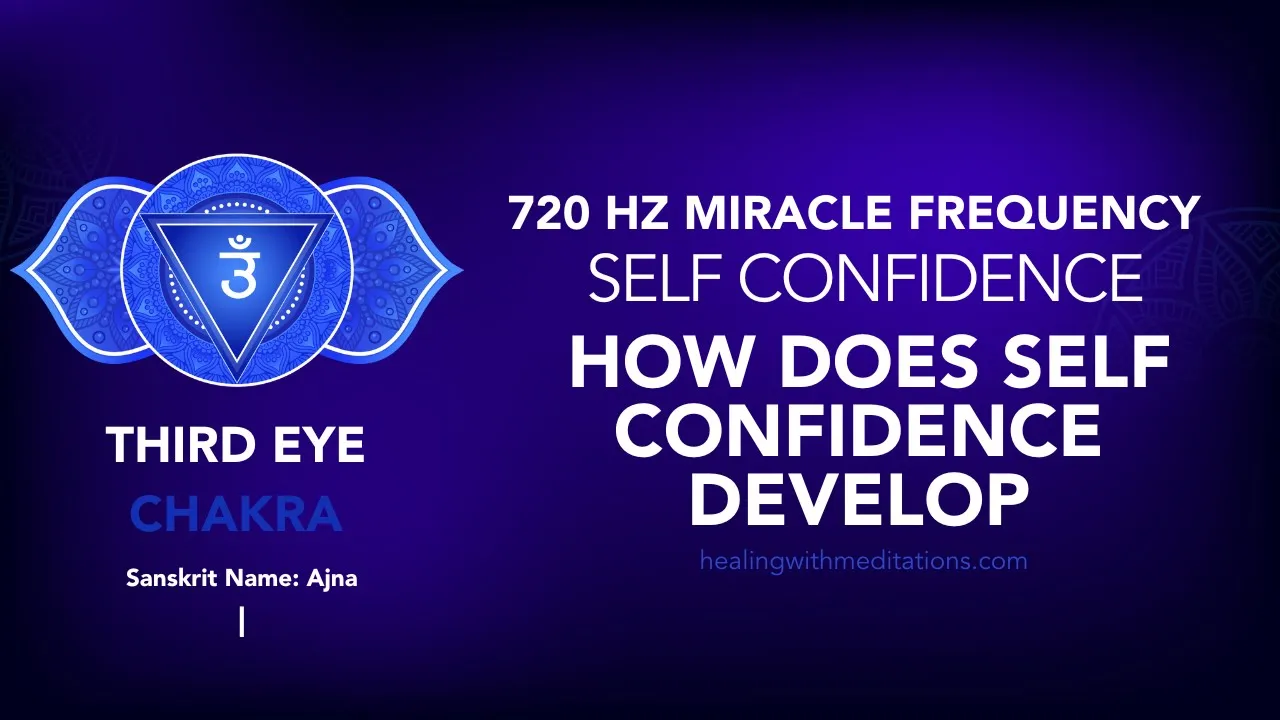
Third Eye Chakra Meditations
A third eye meditation is for the decision you have analysed for a month and are no closer to making. Ajna sits between the eyebrows, and this tradition places perception there — not visions, but the ability to see a situation as it is rather than as the story you have built about it. Its block looks like thinking, which is why it is so hard to spot.
| Sanskrit | Ajna — “command” |
| Where | Between and slightly above the eyebrows |
| Colour | Indigo |
| Element | Light |
| Governs | Intuition, perception, imagination, dreams |
| Blocked | Overthinking, indecision, cynicism, no dream recall |
| Balanced | You decide faster, and the decisions hold up |
| Tone traditionally used | 852 Hz, and 720 Hz in some modern practice — conventions, not measured effects |
What a third eye meditation actually works on
The mistake people make here is treating analysis as the faculty that will solve the problem. You research, you make a list, you weigh it again, and you end exactly where you started — because more thinking was never the missing ingredient.
Ajna practices work by interrupting the loop rather than feeding it. That is why they are short, quiet, and deliberately unproductive.
How to tell whether yours needs attention
Pick whichever is closest to your week.
The classic block. Weeks of consideration producing no movement.
Start with: a time limit. Give the decision twenty minutes, then commit. The loop breaks on a deadline, not on more information.
You can describe what you think about a situation in detail, and not what it does to you.
Start with: naming one physical sensation before naming any opinion.
Read as Ajna gone flat rather than overactive. Common after a long period of pure execution.
Start with: ten minutes of doing nothing, with no input. If flatness persists for weeks, see a doctor.
Traditionally read as the perceptive channel gone quiet. It is also the easiest thing on this list to change.
Start with: writing down anything at all on waking, even a single word, for a week.
The over-firing version: instinct that has stopped checking itself.
Start with: testing one certainty against something you can actually verify.
How to practise it
Sit with the eyes closed and rest attention lightly between the eyebrows. Do not strain towards it or try to see anything — straining is the thing you are practising stopping. When a thought arrives, let it finish rather than fighting it.
Five to ten minutes. Then do something ordinary and physical: this centre goes strange when it runs without grounding.
What this practice is not
It does not produce visions, psychic ability, or a pineal gland effect — that last association is modern and not part of the classical tradition. Headaches, vision changes or a sense of unreality are medical questions, not spiritual milestones.
The guides below
Each one is a single practice, with a meditation you can play while you read.
What the evidence shows — and what it does not. Music and binaural beats have measurable effects: controlled studies report reduced anxiety and lower perceived pain, alongside EEG changes during listening. Those results come from small, varied studies, so treat them as promising rather than settled. There is no peer-reviewed evidence that any single frequency performs a specific biological task. Pick a tone because the sound suits you, not because a number is acting on your cells.
About these guides. Chakra work is a contemplative and symbolic tradition, not medicine. Nothing here is medical or psychological advice, none of it treats or prevents any condition, and it does not replace care from a qualified professional. If you are living with persistent pain, exhaustion, low mood, anxiety or insomnia, please talk to a doctor — and never stop a prescribed medication because of something you read here. If you have epilepsy or a seizure disorder, check with your doctor before using pulsed tones or binaural beats.
How To End Loneliness: 720 Hz Third Eye Chakra Guide
Experience freedom from loneliness with our 720 Hz Third Eye Chakra meditation. Dive into spiritual awakening…
12 min readChakra Frequencies: The Tone for Each Chakra (and Why Sources Disagree)
The Hz for all seven chakras in both charts side by side, where those numbers actually came from, why no two s…
6 min read720Hz Third Eye Chakra Meditation To Boost Emotional Intelligence
Boost your EQ with our Emotional Intelligence Meditation. Harness the power of the 720Hz Third Eye Chakra Freq…
10 min read720 Hz Third Eye Meditation: Unlock Intuition & Potential
Elevate your intuition & self-awareness with 720 Hz Third Eye Chakra Meditation. Unleash your potential…
19 min readBoost Self-Confidence: 720 Hz Chakra Meditation Guide
Freedom from all the blockages that hurt my self confidence … I embrace life with peace, my Past, Present and…
13 min read