Heart Chakra Meditation
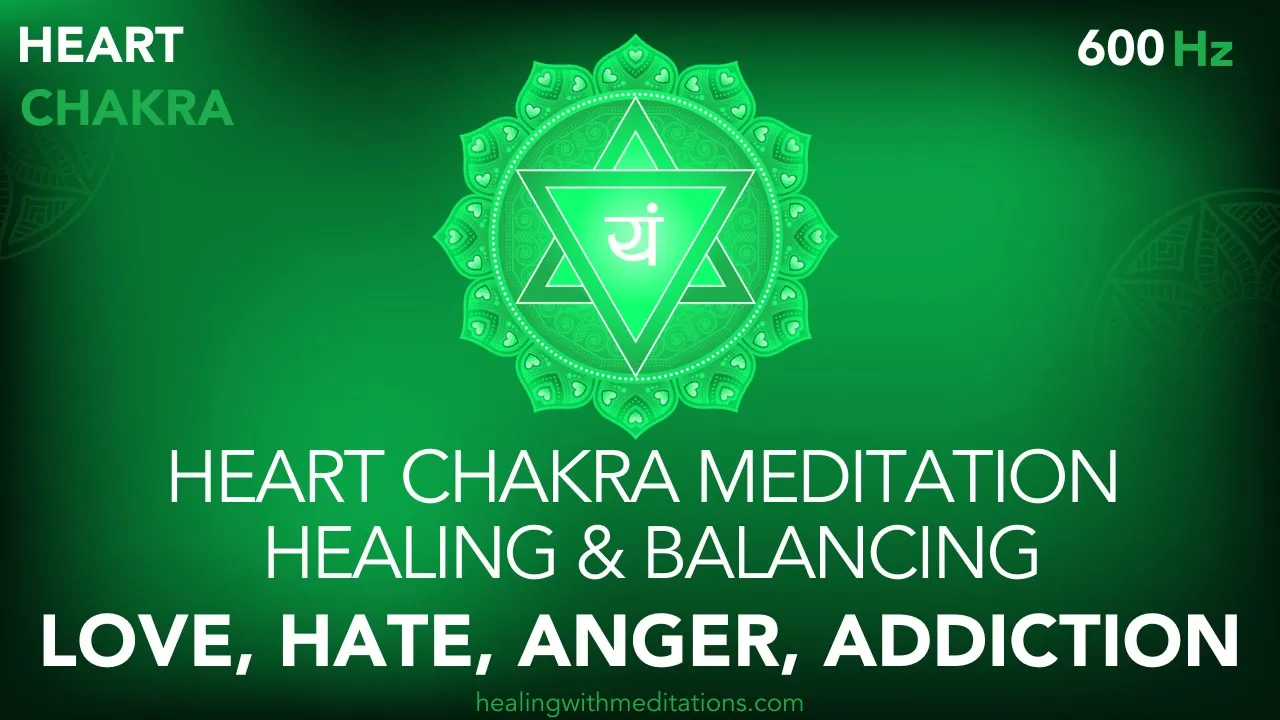
A heart chakra meditation is usually needed on the receiving side, not the giving one. Anahata sits at the centre of the chest, and this tradition places connection and forgiveness there. People who come looking for it are rarely short of compassion — they are short of the ability to accept any.
| Sanskrit | Anahata — “unstruck” |
| Where | The centre of the chest |
| Colour | Green |
| Element | Air |
| Governs | Love, connection, grief, forgiveness |
| Blocked | Over-giving, held grief, difficulty accepting help |
| Balanced | You can be looked after without deflecting it |
| Tone traditionally used | 639 Hz — a convention of the tradition, not a measured property |
What a heart chakra meditation actually works on
Anahata is almost never blocked outward. It is blocked inward. The person who checks on everyone and has nobody checking on them is not short of heart energy; they have one direction open and one closed.
This is also where grief sits. The tradition treats a closed heart after a loss as appropriate rather than damaged — something to be allowed room, not corrected.
How to tell whether yours needs attention
Pick whichever is closest to your week.
Not martyrdom exactly. You would say the arrangement suits you, and you would be slightly angry saying it.
Start with: accepting one thing this week without repaying it. This is the hardest instruction on the page.
Read here as the heart doing exactly what it is for. Grief does not clear on a schedule and does not respond to being hurried.
Start with: time and permission, not technique. If it has stopped moving at all after many months, a therapist helps.
Traditionally the heaviest reading. Forgiveness in this tradition is not absolution; it is putting the weight down.
Start with: writing what you would say, in full, without sending it.
The murky version: care that has started keeping score, silently.
Start with: saying what you actually want in return. Unspoken accounting is what keeps it cloudy.
Nothing to fix. This is Anahata working in both directions.
Start with: noticing what made it possible, so you can protect it.
How to practise it
Sit and put a hand flat on the centre of your chest. Breathe normally and let the exhale lengthen. Bring to mind one person who is easy to care about — not the difficult one — and stay there for a few minutes. Then, without changing anything, include yourself.
That last move is the practice. Most people find it uncomfortable, and that discomfort is the useful information.
What this practice is not
It is not a technique for making someone love you, and it is not a treatment for depression or for a heart condition. Chest pain, breathlessness or a persistent low mood belong with a doctor, quickly.
The guides below
Each one is a single practice, with a meditation you can play while you read.
What the evidence shows — and what it does not. Music and binaural beats have measurable effects: controlled studies report reduced anxiety and lower perceived pain, alongside EEG changes during listening. Those results come from small, varied studies, so treat them as promising rather than settled. There is no peer-reviewed evidence that any single frequency performs a specific biological task. Pick a tone because the sound suits you, not because a number is acting on your cells.
About these guides. Chakra work is a contemplative and symbolic tradition, not medicine. Nothing here is medical or psychological advice, none of it treats or prevents any condition, and it does not replace care from a qualified professional. If you are living with persistent pain, exhaustion, low mood, anxiety or insomnia, please talk to a doctor — and never stop a prescribed medication because of something you read here. If you have epilepsy or a seizure disorder, check with your doctor before using pulsed tones or binaural beats.
Unlock Prosperity: 600 Hz Heart Chakra Money Meditation
Discover the power of 600 Hz Money Meditation for heart chakra healing. Attract wealth, abundance, and prosper…
15 min readHow To Boost Confidence: 600Hz Heart Chakra Meditation
Boost your confidence with our tailored 600Hz heart chakra meditation. Experience the Miracle Chakra Frequency…
14 min readHow To Heal Your Heart Chakra with Hope Meditation & 600 Hz
Embark on a healing journey with Hope Meditation, tuned to the 600 Hz frequency for heart chakra balance. Expe…
13 min readCompassion Meditation: 600 Hz Heart Chakra Healing Guide
Unlock compassion with 600 Hz heart chakra meditation, fostering deep love, empathy, and healing for a fulfill…
13 min readHeart Chakra Healing Guide: 600 Hz Forgiveness Meditation
Experience transformative healing with our 600 Hz Heart Chakra Meditation. Promote forgiveness, release past h…
13 min read600 Hz Heart Chakra Meditation For Excessive Responsibility
Release excessive responsibility with our 600 Hz Heart Chakra Meditation. Find emotional balance, self-care, a…
13 min read600 Hz Chakra Meditation: Heal Loneliness & Deep Connection
Unleash the Potential of 600Hz Money Meditation for Healing Your Heart Chakra. Effortlessly Draw in Wealth, Ab…
13 min readLove Meditation: Heal Relationship Problems With 600 Hz
Dive into the healing realm of love with our 600 Hz Miracle Chakra Frequency. Heal relationship problems, fost…
14 min readHeart Chakra Healing: Balance Emotions With Meditation
My Heart Chakra is balancing, opening and healing with miraculous frequency.... Love, Hate, Anger, Addiction a…
13 min read